In an era where time is scarce and financial decisions abound, automating personal finances offers a path to consistency and long-term prosperity. This article will guide you through creating a system that channels each paycheck toward your most important goals before discretionary spending interferes.
Why Automation Matters
Many people intend to save or invest but end up spending whatever remains in their checking account. By programming your finances to operate on autopilot, you embrace the principle of pay yourself first and ensure that wealth-building happens without hesitation. Automation turns good intentions into reliable outcomes.
Data from the Federal Reserve highlights the gap between intention and reality. In 2024, only 55% of U.S. adults had enough savings to cover three months of expenses, down from 59% in 2021. Meanwhile, individuals who always had money left at month-end were 85% likely to maintain that buffer, compared to just 13% for those who never did. Automation can bridge this divide by capturing spare cash systematically.
- Reduces decision fatigue on payday
- Secures early funding for goals
- Builds resilience against emergencies
Designing Your Financial Pipelines
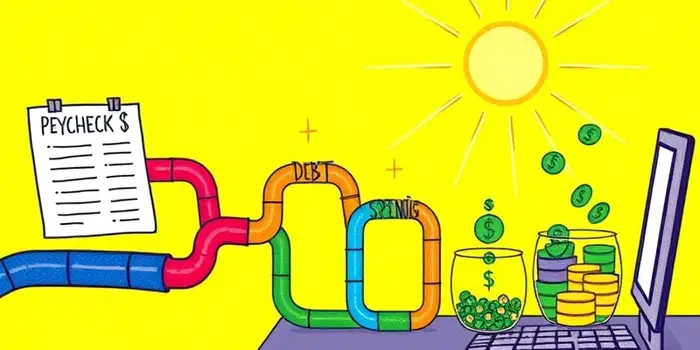
Visualize your finances as a series of interconnected streams directing income to specific destinations. Each pipeline begins the moment your paycheck arrives.
The first stream is salary and wages flowing into a primary checking account. From there, automatic financial pipelines distribute money to various buckets according to priority and timing. Common methods include:
- Direct deposit splitting between checking and savings
- Scheduled transfers on payday or the next business day
- Employer contributions to retirement plans
Once these allocations are set, essential expenses—such as housing, utilities, food, transportation, insurance, minimum debt payments, taxes, and childcare—are covered from a dedicated bills account. This structure prevents accidental overspending and provides clear visibility into monthly obligations.
Building Your Emergency Fund Automatically
An emergency fund is the cornerstone of any risk-aware financial plan. Without liquid reserves, unexpected costs can derail even the best strategies, leading to high-interest debt or forced withdrawals from investment accounts.
Financial experts recommend accumulating three to six months of essential expenses. The ideal target depends on factors such as job stability, income variability, and household size. A practical progression might begin by automating a modest starter reserve, then gradually increasing contributions to cover common disruptions. Next, work toward one month of essential expenses, then three to six months, and set up automatic replenishment after any withdrawal.
Understanding how different age groups fare can motivate progress. The table below shows the percentage of adults in 2024 who had at least three months of savings:
Holding these funds in an insured, liquid account ensures accessibility and capital preservation.
Automating Debt Repayment
Debt automation serves two core functions: maintaining on-time minimum payments and channeling extra funds toward a chosen payoff strategy. Without automation, it can be tempting to delay payments or miss them altogether.
Two popular payoff methods are the debt avalanche and debt snowball. The avalanche prioritizes debts with the highest interest rates, minimizing long-term interest costs. The snowball focuses on the smallest balances first, offering early emotional wins.
- Set up automatic minimum payments for all accounts
- Program an additional transfer toward your target debt
- After one debt is cleared, redirect that payment to the next on the list
Always verify that automated payments align with your cash flow to avoid overdrafts. Review interest rates and billing dates regularly to adjust your setup as needed.
Maximizing Retirement Contributions
Employer-sponsored plans often provide a natural automation mechanism, as contributions are deducted before your salary lands in checking. This approach effectively reduces taxable income and leverages any available employer match.
Key concepts include contribution rate (the percentage of pay you defer), employer match (free money), and vesting schedules (conditions to keep that match). Deciding between traditional and Roth contributions depends on your current tax bracket versus expected future rate.
For many, a diversified target-date fund offers a simple, hands-off solution. You can automate increases to your contribution rate each year, ideally matching or exceeding any inflation adjustment in your salary. Such tax-advantaged retirement accounts compound growth over decades, making them a powerful pillar of automated financial growth.
Reviewing and Adjusting Your System
Automation is not a “set it and forget it” endeavor. Periodic check-ins—quarterly or semiannually—ensure your allocations remain aligned with evolving goals and circumstances. Life changes such as new jobs, family growth, or income fluctuations may warrant recalibration.
During each review, you might adjust savings rates for new objectives, rebalance investments to maintain risk tolerance, update emergency fund targets based on current expenses, and revise debt-payoff schedules. These steps keep your automation flexible and intentional.
Conclusion
By converting financial intentions into automated processes, you remove the friction between goals and execution. Each paycheck becomes the engine driving progress on multiple fronts—emergency savings, debt freedom, retirement security, and discretionary enjoyment.
Start small and scale up. Embrace the power of reduced reliance on willpower and let automated systems guide your journey from surviving paycheck to paycheck to thriving in financial prosperity.
References
- https://www.federalreserve.gov/publications/2025-economic-well-being-of-us-households-in-2024-executive-summary.htm
- https://www.federalreserve.gov/publications/2025-economic-well-being-of-us-households-in-2024-savings-and-investments.htm
- https://www.federalreserve.gov/publications/2026-economic-well-being-of-us-households-in-2025-savings-investments.htm
- https://www.federalreserve.gov/consumerscommunities/sheddataviz/emergency-savings-table.html
- https://www.federalreserve.gov/publications/2026-economic-well-being-of-us-households-in-2025-executive-summary.htm
- https://www.federalreserve.gov/newsevents/pressreleases/other20260513a.htm
- https://fred.stlouisfed.org/series/EMERGENCYSAVINGSALLADULTS
- https://www.federalreserve.gov/publications/2025-economic-well-being-of-us-households-in-2024-overall-financial-well-being.htm
- https://www.stlouisfed.org/publications/page-one-economics/2025/sep/when-unexpected-happens-be-ready-with-emergency-fund
- https://www.federalreserve.gov/publications/2026-economic-well-being-of-us-households-in-2025-overall-financial-well-being.htm
- https://www.federalreserve.gov/publications/2026-economic-well-being-of-us-households-in-2025-economic-hardships.htm