In Q2 2026, U.S. household debt soared to $18.77 trillion, including $1.263 trillion in credit-card balances, $1.713 trillion in auto debt, and $1.65 trillion in student loans. Rising interest rates and growing balances make repayment feel overwhelming for many families.
These numbers illustrate a widespread challenge, but your journey depends on your own balance, APR, income, and essential obligations. With a clear plan, you can regain control and build momentum toward freedom.
Why Now Is the Time to Act
Although aggregate statistics highlight scale, the real problem arises when debt grows faster than your payments or interferes with rent, food, insurance, taxes, or emergency savings. You can halt that trend by adopting a a structured, accelerated repayment process.
Your personal roadmap will translate national data into actionable steps based on your unique situation: current balances, interest rates, minimum payments, income, and unavoidable costs.
Stage 1: Stop the Leak
Before accelerating repayment, you must prevent further balance growth. Even small recurring charges can undermine progress.
- Stop using credit cards being repaid; remove saved details from shopping apps.
- Unsubscribe from promotional emails and pause nonessential subscriptions.
- Avoid replacing credit-card spending with buy-now-pay-later loans.
- Keep minimum payments on every account and essential bills current.
Identifying your largest recurring money leaks lets you focus cuts on what truly matters without sacrificing basic needs.
Stage 2: Build a Complete Debt Inventory
Next, compile a complete debt inventory worksheet to understand each obligation. Collect the latest statement for every account and record key details.
Include whether rates are fixed or variable, any promotional expiration dates, late fees, and whether the debt is secured or jointly held.
With this inventory you can identify the highest-cost and most urgent obligations, rather than focusing solely on the biggest balance.
Stage 3: Calculate Your Repayment Capacity
Your available monthly surplus equals reliable take-home pay minus essential expenses, minimum debt payments, and a small emergency reserve contribution. This extra debt payment capacity fuels accelerated payoff.
A practical formula: Extra Debt Payment = Reliable Monthly Income – Essential Expenses – Minimum Debt Payments – Reserve Contribution. Total Debt Payment then equals all minimums plus that extra amount.
Essentials include housing, utilities, food, transportation, insurance, healthcare, taxes, and necessary work expenses. Treat bonuses and overtime as variable unless they are consistent.
Stage 4: Decide How Much Emergency Savings to Keep
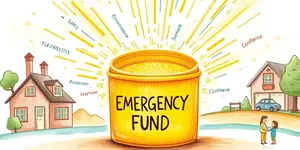
While it’s tempting to funnel every dollar to debt, a complete zero-reserve plan can backfire if unexpected costs force you to borrow again. Aim for a starter emergency reserve before aggressive repayment.
Your initial cushion might cover a minor car repair or a medical copay. As high-interest debt comes under control, build a larger fund to further reduce risk.
Stage 5: Choose Your Repayment Method
Select the approach that best balances speed and motivation. Two common strategies are the avalanche and the snowball, or you can combine them.
Debt Avalanche Method: Make all minimum payments, then direct extra money to the highest-APR debt until it’s eliminated. Advantages include minimized interest cost and often the fastest payoff. Disadvantages: the first account may take longer to clear, delaying visible progress.
- Pros: Usually lowest total interest cost.
- Cons: Fewer quick wins for motivation.
Debt Snowball Method: Make all minimum payments, then focus extra payments on the smallest balance first. Advantages include rapid account closures and psychological reinforcement. Disadvantages: it can cost more in interest if smaller balances carry lower rates.
- Pros: Quick eliminations boost motivation.
- Cons: May accrue more interest overall.
For many households, a hybrid approach works best: target a small or urgent debt first for momentum, then switch to avalanche to minimize interest.
Stage 6: Increase Your Monthly Payments
Every incremental increase accelerates payoff. Try strategies like:
- Reviewing discretionary spending quarterly and reallocating savings.
- Negotiating higher wages or freelance rates and dedicating the difference to debt.
- Selling unused items online and applying proceeds to balances.
Even modest boosts—an extra $50 or $100 each month—can knock years off your timeline and save hundreds in interest.
Stage 7: Seek Professional or Legal Help When Needed
If your numbers don’t work or you face impending default, consider certified credit counseling, a debt-management plan, or negotiation with creditors. In severe cases, legal options like settlement or bankruptcy may provide relief, but only after understanding the long-term credit impact.
Working with a qualified nonprofit counselor or attorney can help you compare alternatives, negotiate lower rates, and protect your essentials.
Conclusion: Your Path to Freedom
Overcoming high-interest consumer debt is challenging but entirely possible with a clear, sequential plan. By measuring the full scope of debt, building a realistic budget, and choosing the right payoff strategy, you can convert scattered obligations into a concrete timeline for freedom.
Each stage builds on the last: stop new borrowing, inventory your balances, calculate surplus cash, maintain a safety reserve, choose your method, boost payments, and get help if needed. With persistence and structure, your debt-free future lies within reach.
References
- https://www.newyorkfed.org/newsevents/news/research/2026/20260811
- https://www.newyorkfed.org/medialibrary/interactives/householdcredit/data/pdf/HHDC_2026Q2
- https://www.newyorkfed.org/microeconomics/hhdc/background.html
- https://www.cnbc.com/2026/08/11/ny-fed-credit-card-debt-hits-1point26-trillion-k-shaped-divide-persists.html
- https://www.newyorkfed.org/medialibrary/interactives/householdcredit/data/pdf/HHDC_2026Q1
- https://www.newyorkfed.org/newsevents/news/research/2026/20260512
- https://abcnews.com/US/credit-card-debt-rises-126-trillion-nearing-time/story?id=135556533
- https://www.theguardian.com/business/2026/aug/12/credit-card-debt-increase-fed-report
- https://www.newyorkfed.org/microeconomics/hhdc
- https://www.federalreserve.gov/publications/2026-may-financial-stability-report-borrowing.htm
- https://www.cnbc.com/2026/05/12/new-york-fed-credit-card-debt-stands-at-1point25-trillion.html
- https://tradingeconomics.com/united-states/debt-balance-credit-cards
- https://consumer.ftc.gov/articles/how-get-out-debt
- https://www.newyorkfed.org/newsevents/news/research/2026/20260210