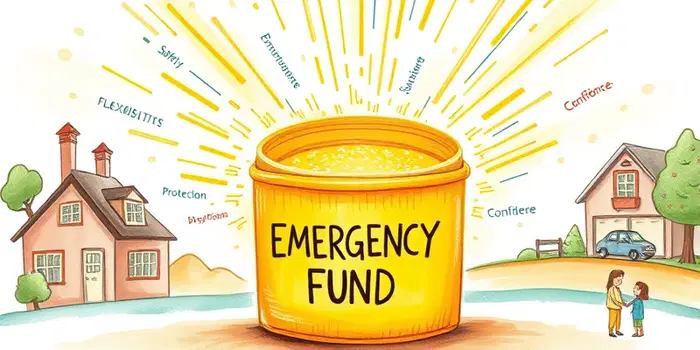
In today’s unpredictable world, an emergency fund is more than a simple bank balance. It acts as a powerful financial shock absorber, converting unforeseen challenges into manageable events. By mastering the art of emergency fund alchemy, you can transform ordinary savings into a resilient safety net that shields against life’s sudden storms.
Why Your Emergency Fund Matters
An emergency fund is the foundation of financial stability. When unexpected expenses or income disruptions occur, having cash on hand prevents high-interest debt, forced asset sales, and missed bills. With steadily replenished with automatic transfers, your fund grows without constant oversight.
According to the Federal Reserve’s 2025 report, 55% of U.S. adults said they had enough savings to cover three months of expenses, unchanged from 2024 and just below the 59% peak in 2021. Meanwhile, 63% of adults could manage a $400 emergency expense with savings or by paying off a credit card at the next statement. Although a 2026 Bankrate survey found only 46% of Americans could cover three months of expenses, these differences reflect varying methodologies. By recognizing each data source by name and question wording, you can draw clear insights and set realistic goals.
Defining a True Emergency
Not every financial need qualifies as an emergency. A useful definition is: an unplanned, necessary, and financially significant expense—or sudden income loss—that cannot reasonably wait until normal cash flow resumes. To decide if a situation qualifies, ask:
1. Was it unplanned?
2. Is it necessary rather than optional?
3. Would paying it disrupt essential bills or require expensive debt?
Appropriate uses include urgent medical treatment, essential home or auto repairs, living costs during unemployment, insurance deductibles, and emergency caregiving obligations. Avoid dipping into this fund for vacations, gifts, routine shopping, or investment opportunities. Those should be covered by sinking funds earmarked for predictable expenses like property taxes or annual memberships.
Sizing Your Emergency Fund
Determining how much to save depends on your personal circumstances. A tiered approach works best:
Starter buffer: $500 to $1,000
Intermediate target: one month of essential expenses
Standard target: three to six months of essential expenses
Higher-resilience target: six to twelve months in high-risk scenarios
Essential expenses generally include housing, utilities, basic food, transportation, insurance, minimum debt payments, childcare, health-care costs, essential medications, communication, and required taxes or support obligations. During a crisis, nonessentials like dining out or entertainment can be reduced or paused.
- Housing and utilities
- Basic food and transportation
- Insurance premiums and minimum debt payments
- Childcare and healthcare essentials
Tracking Savings Over Time
Monitoring progress can inspire consistency. The Federal Reserve’s historical data shows how U.S. households have fared:
These trends highlight gradual improvement punctuated by fluctuations. Comparing your own savings rate to these benchmarks can guide your timeline and milestones.
Adopting a Risk-Adjusted Framework
Rather than one universal number, consider a flexible risk-adjusted emergency-fund target. The formula is:
Emergency-Fund Target = Essential Monthly Expenses × Months of Likely Disruption + Largest Likely Urgent Expense
For example, a household with $3,500 in essentials, expecting a five-month job search and facing a possible $2,000 car repair would need $3,500 × 5 + $2,000 = $19,500. This personalized calculation reflects real-life vulnerabilities and planned contingencies.
When You Need a Larger Reserve
Certain circumstances call for deeper reserves. A three-month fund may suffice for those with stable jobs and low fixed costs, but others require more cushion:
- Variable or commission-based income
- Seasonal or freelance work gaps
- Single-income households or specialized fields
- High health or disability risk
- Dependents or limited community support
- High housing costs or relocations
Adjust your target upward when multiple risk factors apply. Dual-income families should remember both paychecks can be affected by broader economic downturns.
Best Places to Hold Your Emergency Fund
Select an account that prioritizes safe, liquid, and separate account features. Key qualities include principal protection, easy access, and minimal fees.
- High-yield savings accounts: FDIC- or NCUA-insured with competitive interest
- Traditional savings accounts: immediate access but lower rates
- Money market deposit accounts: check-writing privileges and deposit insurance
Avoid tying your emergency fund to volatile investments. Ensure transfers are fast enough to cover immediate shortfalls, and watch for minimum-balance or withdrawal limits.
Building and Maintaining Your Fund
To achieve and sustain your emergency fund goals, follow these practices:
1. Automate monthly contributions from your paycheck.
2. Keep the fund in a separate account you rarely touch.
3. Celebrate milestones—starter buffer, one month, three months, and beyond.
4. Resist the temptation to borrow or raid it for nonemergencies.
5. Review and adjust your target annually or after major life changes.
Mastering emergency fund alchemy means viewing each deposit as an investment in your peace of mind. By crafting an appropriately sized, accessible, separated from spending reserve and replenishing it consistently, you’ll unlock true financial resilience. Turn your savings into security today and face tomorrow with unwavering confidence.
References
- https://www.federalreserve.gov/publications/2026-economic-well-being-of-us-households-in-2025-savings-investments.htm
- https://www.bankrate.com/banking/savings/emergency-savings-report/
- https://www.federalreserve.gov/publications/2025-economic-well-being-of-us-households-in-2024-savings-and-investments.htm
- https://www.federalreserve.gov/consumerscommunities/sheddataviz/emergency-savings-table.html
- https://www.federalreserve.gov/newsevents/pressreleases/other20260513a.htm
- https://www.bankrate.com/press-releases/just-30-of-americans-say-they-would-pay-an-emergency-expense-of-1000-from-savings/
- https://www.federalreserve.gov/publications/2026-economic-well-being-of-us-households-in-2025-executive-summary.htm
- https://walnutinvest.com/stats/emergency-fund-statistics
- https://www.fidelity.com/learning-center/smart-money/emergency-fund
- https://www.theglobalstatistics.com/emergency-fund-statistics-in-us/
- https://www.linkedin.com/posts/sarah-foster-99a024a4_bankrates-2025-emergency-savings-report-activity-7399494919200980992-wrN4
- https://econofact.org/factbrief/fact-check-do-a-majority-of-americans-have-less-than-1000-saved
- https://www.federalreserve.gov/consumerscommunities/sheddataviz/unexpectedexpenses.html
- https://www.cnbc.com/2026/08/22/emergency-savings-workers-financial-strain.html